


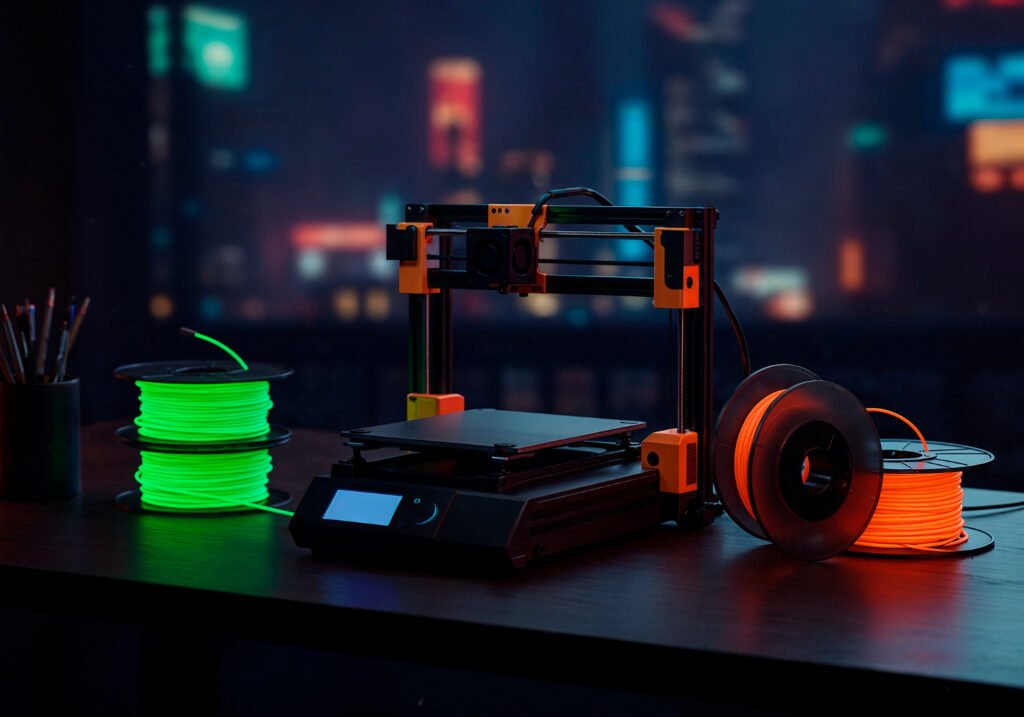
How CAD Design Works: From Concept to Digital Model
At its core, CAD design transforms a creative concept into a precise digital model through a structured process that blends creativity with engineering logic. It begins with a simple idea or sketch, which is then refined using advanced CAD designing software such as AutoCAD, SolidWorks, or Fusion 360. These tools enable designers to convert two-dimensional drawings into three-dimensional geometries with pinpoint accuracy.
The process involves several key stages. Geometry modeling defines the shape and structure of a part, while parameterization allows for flexible modifications by linking dimensions and constraints—so changing one feature automatically updates the entire design. 3D visualization then brings the model to life, allowing teams to explore every angle, material, and assembly interaction before production.
Beyond visualization, CAD design supports simulation and testing in a digital environment. Engineers can analyze stress, temperature, and motion to predict how a part will perform in real-world conditions. This digital validation, especially when combined with cad software for 3D printing, shortens development time and reduces costly errors.
Ultimately, professional CAD design services streamline this entire process—turning raw ideas into manufacturable digital prototypes that bridge the gap between imagination and production.
Types of CAD Design and Applications Across Industries
Modern CAD design encompasses several distinct categories, each serving a specific role in the engineering and manufacturing process. Understanding these types helps businesses choose the right approach for their product development needs.
2D Drafting:
This is the foundation of all CAD design work. Using software such as AutoCAD, designers create precise technical drawings, schematics, and blueprints that define dimensions and tolerances. Although primarily flat, 2D drafting remains essential in architecture, civil engineering, and electronics for layout and documentation.
3D Modeling:
With the evolution of CAD designing software, 3D modeling has become the industry standard. It enables engineers to create detailed virtual models of parts or assemblies, visualize geometry, and simulate motion or interference. 3D models also serve as the base files for CAD software for 3D printing, bridging digital design and physical manufacturing.
Simulation and Rendering:
This advanced stage of CAD design uses physics-based simulations and photorealistic rendering to test how a product will perform or appear before production. Engineers can analyze stress, airflow, and temperature behavior, while designers can produce life-like visualizations for client presentations and marketing.
Across industries, these CAD applications drive innovation:
- Automotive & Aerospace: Design of engines, body structures, and aerodynamic components.
- Architecture: Planning and visualization of buildings and infrastructure.
- Medical Devices: Modeling prosthetics, implants, and surgical instruments.
- Consumer Products: Developing ergonomic, aesthetic, and functional designs.
From concept to production, professional CAD design services unify these capabilities—helping companies innovate faster, reduce errors, and ensure precision across every stage of product development.
Top CAD Designing Software Used by Engineers
Choosing the right CAD designing software is one of the most important decisions for engineers, product designers, and manufacturers. Each program offers unique features that cater to specific industries, workflows, and project scales. Here are some of the most widely used tools in CAD design today.
1. AutoCAD – The Industry Standard
Developed by Autodesk, AutoCAD remains one of the most popular and versatile CAD tools worldwide. It’s ideal for 2D drafting and basic 3D modeling, offering precision and compatibility across architecture, civil engineering, and manufacturing. AutoCAD’s layer management, annotation tools, and DWG file support make it the backbone of digital drafting.
2. SolidWorks – Mechanical Design and Simulation Powerhouse
Created by Dassault Systèmes, SolidWorks specializes in mechanical and industrial CAD design. Engineers use it for parametric modeling, motion analysis, and stress simulation, making it perfect for product development, machinery, and complex assemblies.
3. Fusion 360 – Cloud-Based Collaboration
Autodesk Fusion 360 integrates design, simulation, and manufacturing in one platform. Its cloud-based approach allows real-time collaboration between engineers and clients. It’s also widely used for cad software for 3D printing, since it can export STL files and simulate printability directly from the design.
4. CATIA – Aerospace and Automotive Engineering Leader
CATIA, another Dassault Systèmes product, is the gold standard for large-scale engineering projects in aerospace, automotive, and industrial equipment. It supports advanced surface modeling, systems engineering, and multi-physics simulations, which make it indispensable for high-precision industries.
5. TinkerCAD / FreeCAD – Simplicity for Learning and Rapid Prototyping
For beginners and makers, TinkerCAD and FreeCAD provide easy-to-learn interfaces for conceptual modeling and 3D print prototypes. They are commonly used in education, hobbyist projects, and early-stage CAD design services.
From entry-level to enterprise-grade platforms, these CAD designing software tools shape the modern world of engineering — helping professionals visualize, validate, and manufacture products faster and more efficiently.
CAD Design for 3D Printing: Bridging Digital and Physical Worlds
In modern manufacturing, CAD design plays a crucial role in bridging the gap between digital modeling and physical production. Every 3D-printed object begins as a precise digital file created using advanced CAD designing software such as AutoCAD, Fusion 360, or SolidWorks. These platforms allow engineers to visualize complex geometries, define tolerances, and prepare models optimized for additive manufacturing.
The process typically starts with creating or importing a 3D model, which is then exported into a printable file format such as STL (Stereolithography) or OBJ (Object File). These formats contain the mesh and surface geometry required by 3D printers to interpret the design layer by layer. However, unlike traditional machining, 3D printing imposes unique limitations—such as minimum wall thickness, overhang angles, and support structures—that must be addressed during CAD design.
By leveraging specialized cad software for 3D printing, engineers can adjust designs for manufacturability, simulate build orientation, and ensure structural stability before printing. Professional CAD design services, like those offered by Netprocore, take this process even further—combining expert modeling with real-world printing expertise to deliver ready-to-produce digital files. Whether for rapid prototyping or end-use components, CAD design ensures that every printed part meets both aesthetic and functional expectations, truly connecting the digital and physical worlds.
CAD Design for 3D Printing: Bridging Digital and Physical Worlds
In modern manufacturing, CAD design plays a crucial role in bridging the gap between digital modeling and physical production. Every 3D-printed object begins as a precise digital file created using advanced CAD designing software such as AutoCAD, Fusion 360, or SolidWorks. These platforms allow engineers to visualize complex geometries, define tolerances, and prepare models optimized for additive manufacturing.
The process typically starts with creating or importing a 3D model, which is then exported into a printable file format such as STL (Stereolithography) or OBJ (Object File). These formats contain the mesh and surface geometry required by 3D printers to interpret the design layer by layer. However, unlike traditional machining, 3D printing imposes unique limitations—such as minimum wall thickness, overhang angles, and support structures—that must be addressed during CAD design.
By leveraging specialized cad software for 3D printing, engineers can adjust designs for manufacturability, simulate build orientation, and ensure structural stability before printing.
Professional CAD design services, like those offered by Netprocore, take this process even further—combining expert modeling with real-world printing expertise to deliver ready-to-produce digital files. Whether for rapid prototyping or end-use components, CAD design ensures that every printed part meets both aesthetic and functional expectations, truly connecting the digital and physical worlds.
CAD Design Services: Why Businesses Outsource Digital Modeling
In today’s competitive manufacturing landscape, many companies are turning to professional CAD design services instead of managing design work in-house. The reason is simple: outsourcing offers access to specialized expertise, advanced tools, and faster project delivery—all while reducing costs and improving product quality.
By partnering with firms that specialize in CAD design, businesses gain the advantage of working with engineers proficient in multiple CAD designing software platforms such as AutoCAD, SolidWorks, and Fusion 360. This ensures compatibility across industries, from architecture to aerospace, and allows complex designs to be developed and refined with exceptional precision.
Outsourcing CAD design services also helps companies scale efficiently. Rather than investing in expensive software licenses, training, and full-time designers, they can rely on external teams for on-demand modeling, simulation, and cad software for 3D printing optimization. This flexibility accelerates product development and reduces time-to-market.
Companies like Netprocore go a step further by offering integrated CAD and prototyping solutions—turning digital models into physical products through advanced 3D printing, CNC machining, and simulation. Whether for concept validation or production-ready models, outsourcing CAD design empowers businesses to innovate smarter, faster, and more cost-effectively.
The Future of CAD Design
The next generation of CAD design is evolving beyond static modeling — it’s becoming intelligent, connected, and predictive. Emerging technologies like artificial intelligence (AI), cloud computing, and digital twins are transforming how engineers design, test, and manufacture products.
AI-Powered CAD and Generative Design
Artificial intelligence is changing how products are conceived and optimized. Modern CAD designing software, such as Autodesk Fusion 360 and PTC Creo, now integrates generative design — an AI-driven process that automatically creates thousands of design options based on performance goals, material constraints, and cost targets. Engineers no longer draw every line manually; instead, they guide algorithms that learn and improve from real-world data.
Cloud-Based CAD Collaboration
With the rise of global engineering teams, cloud-based CAD design services are enabling real-time collaboration across continents. Platforms like Onshape and Fusion 360 allow multiple users to work simultaneously on a single model, eliminating version conflicts and accelerating design-to-production cycles. This approach also enhances data security and remote accessibility — key priorities for modern manufacturing.
Digital Twins and Smart Manufacturing
A major leap in CAD design is its integration with digital twin technology — virtual replicas of real products or systems. Using live sensor data and simulation feedback, companies can monitor, test, and improve product performance throughout its lifecycle. Siemens and Dassault Systèmes have already demonstrated how digital twins connect CAD designing software with manufacturing execution systems, creating a fully integrated product ecosystem.
As CAD design continues to evolve, the fusion of AI, cloud, and digital simulation is set to redefine how innovation happens faster, smarter, and more sustainable than ever before.
Conclusion: How CAD Design Powers the Future of Modern Engineering
In today’s era of digital transformation, CAD design stands as the foundation of modern engineering. From conceptual sketches to production-ready models, CAD enables innovation that is faster, smarter, and more precise than ever before. It bridges creativity with technical accuracy—allowing engineers, architects, and manufacturers to bring ideas to life with unmatched efficiency.
Without CAD designing software and advanced CAD design services, the speed and precision we associate with modern product development would simply not be possible. Through tools like AutoCAD, SolidWorks, and Fusion 360, industries can visualize, simulate, and optimize every detail long before production begins.
At Netprocore, we make this digital power accessible. Our comprehensive CAD design services combine engineering expertise with cutting-edge technology—from cad software for 3D printing to full-scale digital prototyping. Whether you’re designing your first concept or refining a complex assembly, Netprocore provides the accuracy, collaboration, and agility needed to turn ideas into reality.
 Partner with Netprocore today and experience how intelligent CAD design transforms innovation into production.