


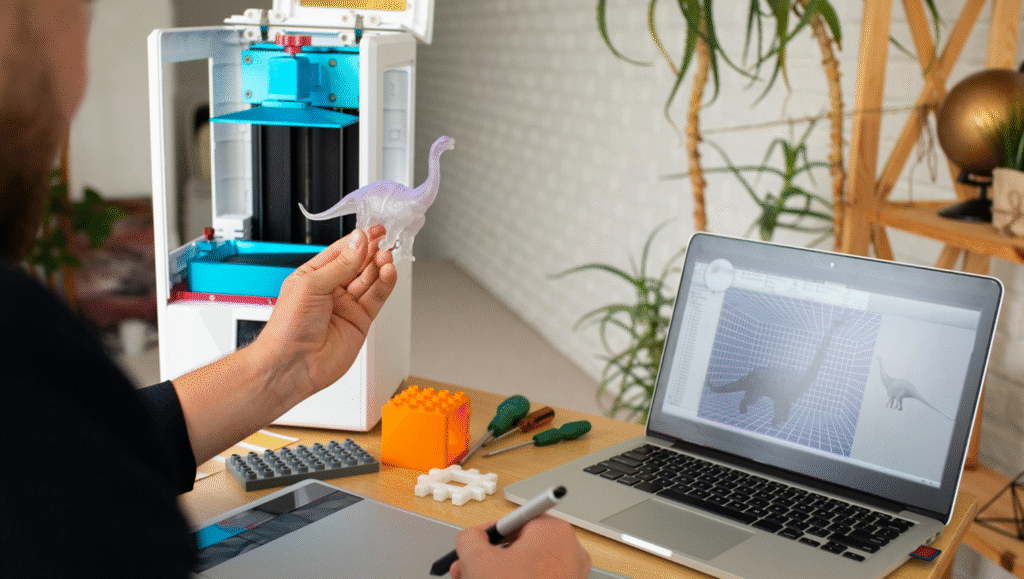
3D printing has revolutionized how products are designed and manufactured — but printing is only half the story. Once a part leaves the printer, it often looks rough, unfinished, or not yet ready for real-world use. This is where post-processing 3D printing becomes essential. It’s the stage that transforms printed prototypes into professional, functional, and visually refined components ready for testing, assembly, or final delivery.
In this complete guide to 3D printing post-processing, we’ll explore how raw 3D printed parts evolve through a variety of finishing techniques — from support removal and cleaning to sanding, coating, and mechanical assembly. You’ll discover the science behind surface finishing, how materials like resin, PLA, and metal demand different treatments, and why professional post-processing services make all the difference when precision and durability matter.
Whether you’re a designer perfecting a prototype, an engineer preparing for production, or a manufacturer seeking consistent quality, understanding what post-processing in 3D printing truly involves can transform the way you approach your next project.
Keep reading to learn how the right post-processing techniques can take your 3D prints from raw to remarkable.
1. What Is Post-Processing in 3D Printing and Why It Matters
In modern additive manufacturing, printing a part is only the beginning — true quality is achieved through post-processing 3D printing. This essential stage transforms freshly printed components into durable, functional, and visually refined products. While printers can create complex geometries, the raw 3D printed parts often have rough surfaces, visible layer lines, or untested strength. Through a structured post-processing workflow for prototypes, these imperfections are removed to meet industrial standards.
Post-processing 3D printing includes several key steps such as support removal, cleaning, resin curing, sanding, and polishing and painting 3D prints. These 3D printing finishing techniques not only enhance surface smoothness and color consistency but also ensure the mechanical integrity required for real-world applications. Whether working with SLA or FDM post-processing, each material—from resin to metal—requires a tailored approach to achieve optimal results.
Professional companies like Netprocore specialize in prototype finishing and post-processing 3D printed parts, turning basic prints into production-ready components. Understanding how to post-process 3D printed parts effectively is what separates a prototype from a perfected product.
2. The Key Steps in Post-Processing 3D Printing
Post-processing 3D printing involves a series of carefully executed steps that turn rough, freshly printed components into smooth, professional-quality parts. While the workflow may vary depending on the material and printing technology, these are the most common and essential stages used by every 3D printing post-processing company:
- Support Removal
The first step in post-processing 3D printed parts is removing the temporary support structures used during printing. For SLA and FDM post-processing, this may involve mechanical clipping, solvent dissolution, or ultrasonic cleaning. Proper support removal ensures the part’s geometry remains intact and free from surface defects. - Cleaning
After supports are removed, the printed object must be thoroughly cleaned to eliminate excess resin, powder, or debris. Cleaning 3D prints is vital for smooth surface texture and paint adhesion, particularly for resin-based or powder-bed technologies. - Resin Curing
For photopolymer prints, resin curing under UV light strengthens the material and stabilizes its dimensions. This step significantly increases mechanical performance and durability. - Sanding & Smoothing
Surface refinement through 3D print surface finishing techniques like sanding, vapor smoothing, or bead blasting removes layer lines and improves visual quality. - Painting & Coating
Polishing and painting 3D prints provide the final aesthetic touch while protecting against environmental wear. Industrial coatings, primers, and electroplating can also be applied for long-term use. - Assembly & Final Inspection
The last step in the post-processing workflow for prototypes involves joining multi-part assemblies, testing fit and function, and performing quality checks.
These steps represent the best methods for post-processing 3D prints, ensuring that every prototype achieves professional-grade precision, durability, and finish.
3. Types of 3D Printing Post-Processing Techniques
The variety of post-processing 3D printing techniques available today allows engineers and manufacturers to refine parts for almost any application—from prototypes to end-use components. These methods can be grouped into three major categories based on the process type and desired results.
Physical Techniques
Physical finishing methods directly modify the surface through mechanical action. Techniques like sanding, tumbling, and polishing 3D prints remove visible layer lines and improve tactile smoothness. These steps are essential for enhancing appearance and preparing parts for painting or coating. For larger post-processing 3D printed parts, automated polishing systems can significantly reduce labor and time while maintaining consistency.
Chemical Techniques
Chemical processes such as vapor smoothing, solvent dipping, and epoxy coating use controlled reactions to melt or bond surface layers. Vapor smoothing is especially effective for SLA and FDM post-processing, giving plastics like ABS or resin a glossy, injection-molded look. These 3D printing finishing techniques improve not just appearance but also part strength and water resistance.
Industrial Techniques
Industrial-grade finishes include painting, powder coating, and electroplating 3D printed parts, often used for functional prototypes and consumer products. Such coatings protect parts from UV, chemicals, and wear, extending their lifespan. Combining these with resin curing and precise assembly produces a fully professional result.
Whether manual or automated, selecting the best methods for post-processing 3D prints depends on the material, geometry, and intended use. Professional providers like 3D printing post-processing companies ensure repeatable quality through standardized procedures—making post-processing the true finishing touch of modern additive manufacturing.
4. Post-Processing by Material Type
Different materials demand different approaches in post-processing 3D printing, as each has unique surface properties, mechanical behavior, and thermal sensitivity. Understanding how to post-process 3D printed parts by material type ensures precision, strength, and a high-quality finish in every project.
FDM (PLA / ABS): Sanding and Vapor Smoothing
For FDM-based plastics like PLA and ABS, the most common techniques include sanding, filling, and acetone vapor smoothing. Sanding eliminates visible layer lines, while vapor smoothing creates a glossy, injection-molded appearance—especially for ABS. These 3D printing finishing techniques enhance both aesthetics and water resistance.
SLA (Resin): Washing, Curing, and Coating
Resin parts produced by SLA and DLP printing require specialized handling. Support removal 3D printing and alcohol-based washing remove uncured resin. Subsequent UV resin curing improves hardness and dimensional stability. A protective coating may also be applied for a smoother surface and long-term durability.
SLS (Nylon): Bead Blasting and Dyeing
For SLS nylon parts, bead blasting removes excess powder and refines the matte surface. Coloring or dyeing is often added for branding or aesthetic customization. This type of 3D print surface finishing is ideal for functional prototypes that require consistent textures.
Metal 3D Printing: Polishing and Heat Treatment
Metal 3D printing post-processing is more complex, involving polishing, machining, and heat treatment. These steps relieve internal stresses and improve fatigue resistance. Some manufacturers also apply coatings or electroplating for corrosion protection.
Each material’s post-processing workflow for prototypes must be adjusted at the CAD design stage—accounting for tolerances, shrinkage, and finishing allowances—to achieve perfect form and function.
5. Why Post-Processing Defines Product Quality
In modern additive manufacturing, post-processing 3D printing is not just a finishing touch—it’s what determines the final product’s quality and performance. The process refines both the surface quality and the structural integrity of 3D printed parts, bridging the gap between a prototype and a production-ready component.
Proper prototype finishing ensures that every surface is smooth, consistent, and free from imperfections that could affect mechanical performance. Aesthetic improvements like polishing and painting 3D prints enhance visual appeal, while technical steps such as resin curing and functional testing improve part durability, ensuring that components withstand stress, heat, and impact.
Industry studies have shown that high-quality SLA and FDM post-processing can increase tensile strength by up to 20% and reduce surface roughness by more than 50%. These measurable gains make post-processing an indispensable step in quality control.
For engineers and manufacturers, understanding how to post-process 3D printed parts is crucial to maintaining consistent results. Professional 3D printing post-processing companies employ standardized workflows for inspection, finishing, and assembly—guaranteeing precision and repeatability across every batch. Ultimately, post-processing defines not just how a part looks, but how it performs and lasts.
6. The Role of Assembly in the Post-Processing Workflow
Once surface refinement is complete, the next crucial phase of post-processing 3D printing is assembly. Mechanical assembly transforms individual components into complete, functional systems—making it the final step that connects design precision with real-world usability.
In the post-processing workflow for prototypes, assembly can be manual or automated, depending on the complexity and scale of the project. Manual prototype assembly is ideal for low-volume runs or parts requiring human precision, such as fitting snap joints or adjusting tolerance-critical components. Automated assembly, on the other hand, offers faster production cycles and consistent precision fitting—especially for products with repetitive geometries or electronic enclosures.
Beyond connecting parts, assembly also enables functional testing, ensuring that every moving or interconnected part performs exactly as designed. For instance, in mechanical systems or wearable prototypes, even a micron-level misalignment can affect performance or comfort.
At Netprocore, assembly is not treated as an afterthought—it’s an integrated part of the professional post-processing services for 3D printing. Each project undergoes precise mechanical fitting, inspection, and quality verification before delivery. Whether assembling multi-material housings or motion-enabled prototypes, Netprocore ensures that every finished product meets both visual and functional excellence.

7. Professional Post-Processing Services: Why Partner With Experts
Even the most advanced printer can’t deliver a perfect part on its own. True excellence comes from professional post-processing 3D printing services — where precision, speed, and industrial-grade finishes transform prototypes into production-ready components.
Working with experts ensures more than just visual refinement. Professional post-processing 3D printed parts prevents surface defects, improves mechanical strength, and reduces costly reprints. Through specialized 3D printing finishing techniques such as resin curing, sanding, and polishing and painting 3D prints, every part achieves a consistent look and feel that meets engineering and aesthetic standards.
Choosing a professional 3D printing post-processing company also minimizes risk. Engineers benefit from expert handling of delicate materials, while businesses save time and resources by outsourcing the most demanding steps to specialists. These providers use advanced tools and inspection workflows to maintain repeatability and high-quality results at scale.
At Netprocore, post-processing goes beyond basic finishing. We deliver end-to-end manufacturing services, combining 3D printing and CNC machining with expert prototype finishing and surface quality control. Every project is guided by precision, durability, and visual perfection — ensuring each part performs as impressively as it looks.
👉 Upload your 3D files to Netprocore and get a professional post-processed finish within days.
8. Conclusion: From Print to Perfection — The Final Step That Defines Quality
In modern manufacturing, post-processing 3D printing is more than an afterthought — it’s the defining stage that separates rough prototypes from polished, functional products. Without post-processing, even the most precise print remains incomplete, lacking the surface refinement, accuracy, and reliability demanded by real-world applications.
Through 3D print surface finishing, resin curing, and prototype finishing, post-processing ensures that every layer of innovation is supported by craftsmanship and engineering precision. It enhances the mechanical integrity, aesthetic quality, and overall usability of 3D printed parts, allowing them to meet both industrial and commercial expectations.
As additive manufacturing continues to evolve, the companies that prioritize finishing and quality control will lead the industry forward.
That’s why Netprocore post-processing services are built around one mission: helping innovators turn their ideas into production-grade results. Whether you need SLA and FDM post-processing, complex assembly, or professional surface finishing, our team delivers the expertise and care your project deserves.
✨ From print to perfection — Netprocore ensures every detail counts.